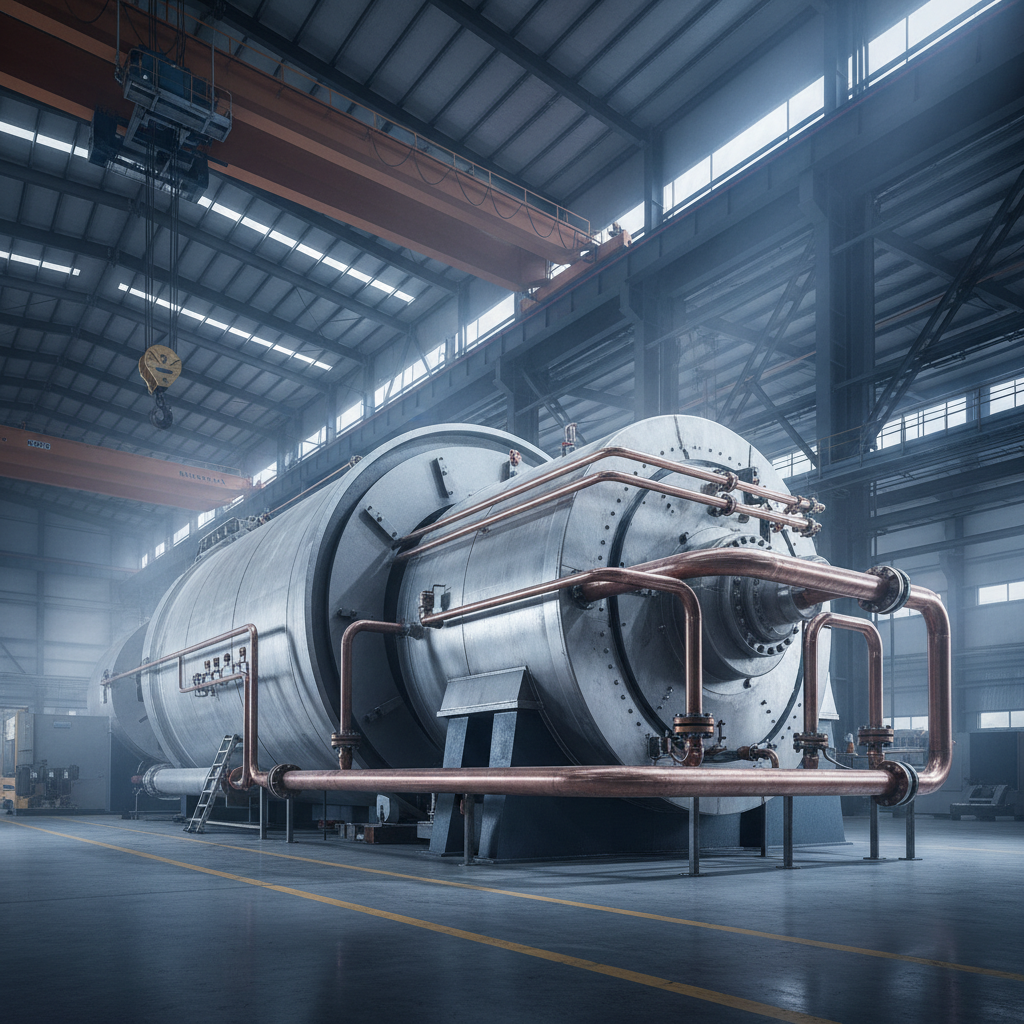
In the demanding landscape of industrial heating and power generation, the coal boiler remains a cornerstone of energy production. Despite the global transition toward diversified energy portfolios, these systems provide the necessary thermal baseline for countless manufacturing processes, offering a reliable and high-capacity heat source that many industries rely on for operational stability.
Understanding the mechanics and strategic implementation of a modern coal boiler is essential for plant managers and engineers aiming to balance energy costs with output requirements. From textile mills to chemical processing plants, the ability to generate consistent steam or hot water via coal combustion allows for scaled production that would be prohibitively expensive using purely electrical or gas-based systems in certain regions.
As regulatory environments evolve, the focus has shifted toward enhancing the efficiency and environmental compliance of these systems. Today's advanced coal-fired technology integrates sophisticated filtration and combustion controls to maximize caloric output while minimizing the ecological footprint, ensuring that the coal boiler continues to serve as a viable industrial tool in a sustainability-conscious world.
Global Industry Context of Coal Boilers
On a global scale, the reliance on coal-fired thermal energy remains significant, particularly in developing industrial zones where coal is abundant and cost-effective. According to data trends observed in heavy industrial sectors, the coal boiler provides a critical bridge for nations expanding their manufacturing capacity without relying on volatile imported natural gas markets.
However, the industry faces the dual challenge of meeting rigorous ISO environmental standards while maintaining the high-pressure steam output required for heavy machinery. This tension has driven a wave of innovation in "clean coal" technologies, transforming the traditional boiler from a simple furnace into a high-precision heat exchange system.
Defining the Modern Coal Boiler
At its most fundamental level, a coal boiler is a closed vessel designed to transfer heat from the combustion of coal to water, thereby producing steam or hot water. Unlike simple residential stoves, industrial coal boilers use complex heat exchange surfaces—such as water walls and superheaters—to maximize the energy captured from every kilogram of fuel consumed.
In the context of modern industry, these systems are categorized by their design, such as grate-fired or pulverized coal systems. This distinction allows businesses to choose a boiler based on the quality of coal available to them, ensuring that the energy conversion process is optimized for the specific caloric value of the fuel source.
Beyond the technical definition, these boilers represent the heart of an industrial facility. They provide the thermal energy necessary for sterilization in food processing, heating in large-scale textile dyeing, and power in chemical synthesis, making them indispensable for humanitarian and economic development in remote industrial regions.
Core Components and Engineering Factors
The efficiency of a coal boiler is primarily determined by its combustion chamber design and the quality of its heat exchange materials. High-grade alloy steels are utilized to prevent corrosion and withstand the extreme temperatures and pressures associated with coal combustion, ensuring long-term structural integrity.
Another critical factor is the air-to-fuel ratio control. Modern coal boiler systems incorporate automated dampers and oxygen sensors to ensure complete combustion, which not only increases the thermal efficiency but also significantly reduces the emission of carbon monoxide and unburnt particulates.
Lastly, the integration of economizers—devices that use waste flue gas to preheat the incoming feed water—represents a vital engineering upgrade. By recycling energy that would otherwise be lost to the atmosphere, the coal boiler achieves a much higher overall system efficiency, reducing the total cost of ownership.
Global Applications and Real-World Use Cases
The versatility of the coal boiler allows it to be deployed across a vast array of sectors. In the paper and pulp industry, for instance, massive boilers provide the high-pressure steam needed for chemical pulping and drying processes, where consistency in temperature is non-negotiable for product quality.
In remote industrial zones or post-disaster recovery areas where natural gas pipelines are non-existent, coal boilers offer a self-sufficient energy solution. These installations allow local factories to restart production and provide essential heating to worker housing and administrative facilities without depending on a fragile external grid.
Efficiency Comparison of Coal Boiler Configurations
Long-Term Value and Operational Advantages
The primary logical advantage of opting for a coal boiler is the stabilization of operational costs. In regions where coal is a domestic resource, businesses are shielded from the price shocks of the global oil and gas markets, providing a predictable financial forecast for long-term industrial projects.
Beyond the financial metrics, there is a reliability factor that provides peace of mind to operators. A well-maintained coal boiler system is a robust workhorse, capable of running continuously for years with standard maintenance cycles, ensuring that production lines never stop due to fuel shortages or grid failures.
Future Trends in Combustion Innovation
The future of the coal boiler is inextricably linked to the digital transformation of the energy sector. We are seeing the rise of AI-driven combustion optimization, where machine learning algorithms adjust the fuel feed and air intake in real-time to maintain the absolute peak efficiency of the boiler.
Simultaneously, there is a shift toward hybrid fuel capability. Many new boiler designs allow for the seamless blending of coal with biomass materials, such as agricultural waste. This not only reduces the carbon intensity of the operation but also allows companies to utilize local waste streams as a secondary energy source.
Furthermore, advancements in carbon capture and storage (CCS) are being integrated at the boiler level. By capturing CO2 directly from the flue gas of a coal boiler, industries can continue to utilize the high energy density of coal while drastically reducing their atmospheric impact, aligning industrial growth with global climate goals.
Overcoming Technical Challenges in Coal Heating
One of the most persistent challenges with the coal boiler is the management of ash and slag. These deposits can insulate heat transfer surfaces, leading to a drop in efficiency and potential structural damage over time. Expert solutions now include automated soot blowers and advanced water-wash systems that keep the tubes clean without requiring a full system shutdown.
Another hurdle is the emission of sulfur oxides (SOx) and nitrogen oxides (NOx). To combat this, modern plants are installing flue-gas desulfurization (FGD) units and selective catalytic reduction (SCR) systems. These additive technologies treat the exhaust stream, ensuring the boiler meets the strictest environmental air quality standards.
Finally, the issue of boiler feed water quality can lead to scaling and corrosion. The implementation of sophisticated water treatment plants—incorporating reverse osmosis and ion exchange—ensures that the water entering the coal boiler is pure, thereby extending the lifespan of the equipment and preventing catastrophic tube failures.
Comparison of Technical Solutions for Coal Boiler Optimization
|
Challenge Category
|
Technical Solution
|
Efficiency Gain
|
Impact Level
|
|
Ash Accumulation
|
Automated Soot Blowers
|
High (5-8%)
|
Critical
|
|
Flue Gas Emissions
|
SCR & FGD Systems
|
Low (Environmental)
|
High
|
|
Heat Loss
|
Economizer Integration
|
Very High (10-15%)
|
Essential
|
|
Tube Corrosion
|
Reverse Osmosis Water Treatment
|
Medium (Lifespan)
|
High
|
|
Combustion Control
|
AI-Driven Oxygen Sensors
|
Medium (3-5%)
|
Moderate
|
|
Fuel Versatility
|
Co-firing Biomass Burners
|
Medium (Cost)
|
Strategic
|
FAQS
Modern coal boilers utilize advanced heat exchange surfaces, such as water-wall designs and economizers, which capture waste heat from flue gases to preheat feed water. Additionally, the use of automated combustion control systems ensures the optimal air-to-fuel ratio, reducing fuel waste and increasing the overall thermal efficiency compared to legacy manual-feed systems.
With a rigorous maintenance schedule—including regular descaling, soot blowing, and water quality management—a high-quality industrial coal boiler can have an operational lifespan of 20 to 30 years. The key to longevity is preventing internal corrosion and overheating through consistent monitoring of the pressure vessel and water chemistry.
Yes, many modern coal boiler designs are built for "co-firing," meaning they can burn a mixture of coal and biomass (such as wood pellets or agricultural waste). While some older boilers may require modifications to the grate or the fuel feeding system, hybrid capabilities are becoming a standard feature to help industries reduce their carbon footprint.
They can be, provided they are equipped with the necessary emission control technologies. By integrating flue-gas desulfurization (FGD) and selective catalytic reduction (SCR) systems, coal boilers can effectively remove SOx and NOx emissions, allowing them to operate within the legal limits set by local and international environmental agencies.
The most significant risk is "dry firing" or overheating due to low water levels, which can lead to catastrophic tube failure or explosions. This is why modern systems incorporate redundant water-level alarms and automatic shut-off valves to ensure the boiler never operates without sufficient water coverage.
The choice depends on fuel quality and scale. Grate-fired boilers are generally better for lower-grade coals and smaller capacities due to their simplicity. Pulverized coal boilers are designed for massive scale and higher efficiency, as they grind the fuel into a fine powder for near-instantaneous combustion, though they require more complex infrastructure.
Conclusion
In summary, the coal boiler continues to be a vital asset in the global industrial landscape, providing the high-capacity thermal energy necessary for heavy manufacturing and infrastructure. By integrating modern engineering—such as AI controls, economizers, and emission scrubbers—the industry has successfully evolved these systems from simple combustion units into highly efficient, compliant, and reliable energy centers that drive economic growth in diverse regions.
Looking forward, the trajectory of coal-fired heating lies in hybridity and digitalization. For businesses seeking to balance immediate energy needs with long-term sustainability goals, investing in high-efficiency, adaptable boiler technology is the most prudent path. We encourage plant operators to prioritize water treatment and emission controls to maximize the lifespan and social acceptability of their installations. Visit our website for more professional solutions: www.yinengboilers.com